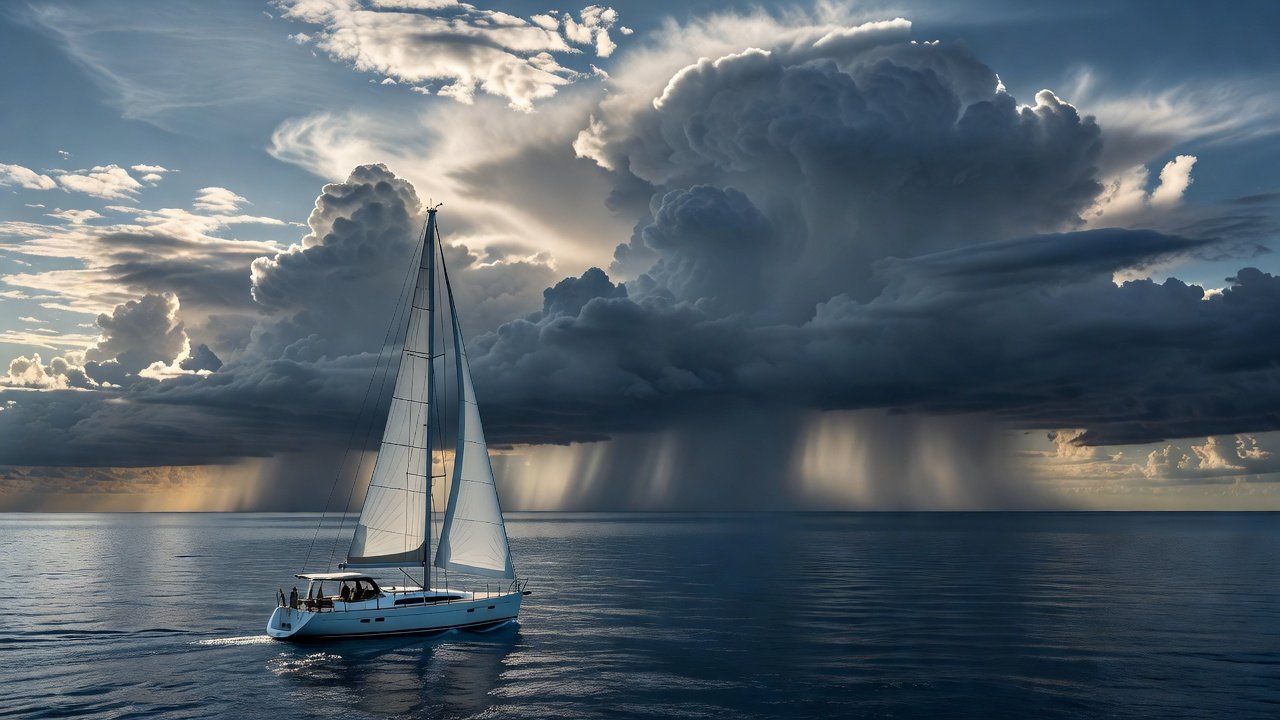
Sailing from Tahiti to Hawaii takes a yacht north across the equator and through the doldrums, then into the northeast trades. It is one of the long classic Pacific legs, more than 2,300 nautical miles in a straight line and more in practice, and it is a hard one to plan precisely because the middle of the route depends on a weather band that moves. This guide covers the main route choices, seasonal timing and how cruisers approach the crossing.
Treat this as an overview, not a routing service. Consult current pilot charts, a qualified weather source and recent cruiser reports before departure, and remember that the passage decisions rest with the skipper.
The Shape of the Route
From Tahiti the first miles are usually spent in the southeast trades, which push a northbound boat across the wind. Cruisers commonly work east and north to gain easting before the equator, because the trades north of the doldrums blow from the northeast and a boat that arrives too far west can be forced to beat toward Hawaii. One source on Polynesian voyaging puts it plainly: keep east before the equator, or you may end up sailing into the wind.
Some boats leave from Papeete and others from the Tuamotus, which have the advantage of already being east. The Tuamotus are also treacherous to pass in the dark and chart errors are well known; see our Tuamotu navigation guide. After the equator the route turns toward the Hawaiian Islands, with a long, often fast reach or beat depending on the trade angle.
Stopovers Along the Way
The Line Islands lie roughly midway and offer optional stops. Christmas Island, now Kiritimati, and Fanning, now Tabuaeran, are in Kiribati. A North Pacific crossing article notes that these sit too close to the equator to be affected by tropical cyclones, while Palmyra Atoll lies just inside the cyclone belt.
Access can be restricted. Palmyra is a national wildlife refuge, and operators have reported uncertainty about whether it will be open to visitors. Kiribati entry rules and formalities should be checked directly. Do not plan around a stop that you have not confirmed, and treat any such island as a bonus and not a reserve.
Seasonal Windows
Timing is a compromise between two storm seasons. The South Pacific cyclone season runs roughly November to April, and the North Pacific tropical storm season starts around June and continues into the fall. Historic voyaging accounts recommend the shoulder between them. Planning guides for the reverse direction also point to late spring and early summer, and the same logic applies northbound.
That window is narrow, and it does not make the passage safe or easy. Seasons vary year to year. Look at current-season forecasts for both hemispheres, and have a plan for where to wait if systems are active.
Crossing the Doldrums
The intertropical convergence zone, or ITCZ, is where the northeast and southeast trades meet. The result is variable wind, calms, towering squalls and heavy cloud. Its position shifts between roughly the equator and about 10 degrees north over the year, and the part relevant to a Tahiti to Hawaii route has been described as averaging between about 9 and 3 degrees north. Width and activity vary: some crossings are barely noticeable, while others mean days of light air or motoring, and a recent expedition log described an unusually broad band.
Practical approaches that cruisers and voyaging crews describe include:
- Cross by the shortest path. Aim to leave the zone quickly rather than drift with the wind shifts.
- Use current weather data. Satellite imagery and GRIB files show where the band is today.
- Prepare for squalls. Reef early, secure the deck and keep someone on watch; squalls can arrive with sudden shifts and strong gusts.
- Carry fuel margin. Calms may call for motoring, and fuel is scarce along this route. Our Papeete boat maintenance guide are a place to start the preparation.
Communications and Preparation
Offshore, you will want a satellite link for forecasts and emergencies; our connectivity guide covers options and the caveats on Starlink in the territory. Complete clearance before leaving French Polynesia; our customs guide covers entry, and departure formalities should be confirmed with the authorities.
Arrival in Hawaii
The final days bring the northeast trades and, depending on your track, a long reach or beat to the islands. Hawaii has its own entry formalities for arriving yachts, and these are set by US authorities, so confirm the current requirements, including where you must clear in, before leaving Tahiti. Arriving crews also face busy approaches and varied currents between the islands, so plan your landfall for daylight and keep a reserve of fuel and food for the last miles.
Crew fatigue is a real factor on a passage of this length. Set a watch system you can sustain, rest during the calmer periods in the ITCZ, and keep spare gear for the squalls. A slow, steady passage with margin in reserve is far better than a hard-driven one that leaves the boat or crew with no buffer.
Finally, keep a written plan for diversions. Know which islands could serve as a refuge, what each would require for entry, and at what point on the route returning to French Polynesia stops being practical. Revisit that plan with each weather update and share it with someone ashore.
Takeaway: Make easting early, choose a departure window between the two storm seasons, watch the ITCZ with fresh weather data, and carry fuel and spare time. Confirm any Line Islands or Palmyra stop before relying on it.