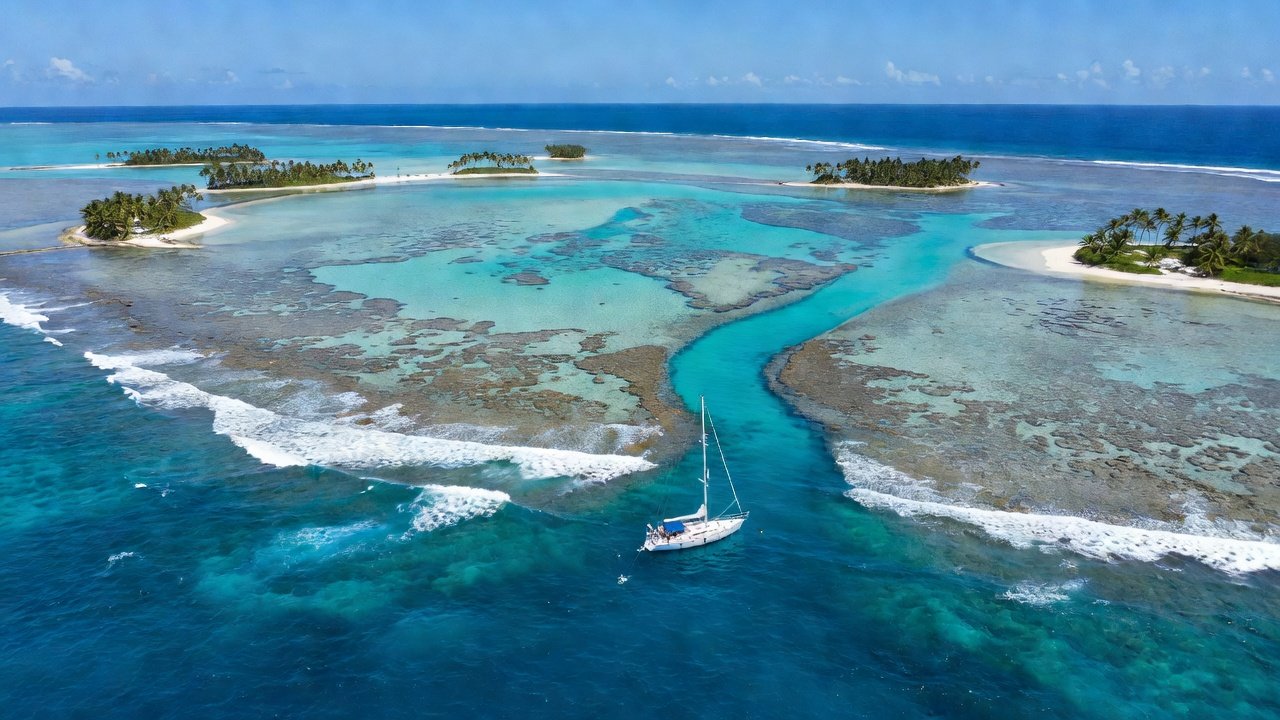
Rangiroa and Tikehau are the northwestern Tuamotu atolls most often reached first from Tahiti and Moorea, and for many yachts they are the first lagoon passes of the voyage. Rangiroa is one of the largest atolls in the world; Tikehau is smaller, sits in the same group and falls within the commune of Rangiroa. Neither offers a marina. Both reward careful pass planning and a boat stocked for limited shops.
Everything below is general planning information drawn from cruiser reports and Noonsite-style notes, some of them several years old. Passes, depths, moorings and shops change. Check current charts, pilot books, tidal current guidance and recent local advice before you commit.
Rangiroa’s Two Passes
Rangiroa has two commonly used passes, Avatoru and Tiputa, and currents run hard through both. The consistent advice from cruisers is to time entry or exit as close to slack water as possible. Because lagoon filling, swell, wind and the moon all affect the flow, predictions are guides and not guarantees. Currents can change speed and direction quickly.
Reported character differs between the two. Avatoru is described as wide and relatively easy, though a strong incoming current calls for caution. Tiputa is deeper and can run considerably faster; one older cruiser account puts Tiputa near 10 knots and Avatoru around 4, but treat any single figure as anecdotal. Tiputa faces northeast, and cruisers describe it as very rough when an outgoing current meets strong east or northeast wind and swell, because the opposition builds steep standing waves.
Our Tuamotu navigation guide covers slack-water logic and chart accuracy in more depth. Two points bear repeating: approach in good light with someone watching from the bow, and do not enter on a falling barometer or in a swell that is pushing against the flow. If the timing is wrong, waiting outside is the correct decision.
Rangiroa Anchorages
Yachts commonly anchor near Tiputa village, and many report the more sheltered spot off a resort near the pass. Depths in the sheltered area are described as roughly 15 to 50 feet over sand with scattered coral heads. Coral heads snag chain, and cruisers have reported broken chain and windlass damage in a strong south wind with short scope, so use floats on the chain where you can and check holding before you leave the boat.
An underwater cable is reported in Avatoru Pass, so never anchor in the pass itself. Avoid damaging live coral and observe any local signage or instructions. Moorings or rules may exist that postdate the sources we found.
Tikehau’s Single Pass
Tikehau is notable for one navigable entrance. Tuheiava Pass, on the western side, is reported as roughly 150 meters wide and 4 to 8 meters deep, with advice to stay in the middle and avoid entry in strong northwest wind. A single pass means the whole lagoon drains and fills through one opening, so currents there can be strong and the timing question is the same as at Rangiroa.
Anchorage near the main village is reported as open, so wind direction matters and a settled forecast is advisable before you stay overnight. Dive operators and local boat traffic share the lagoon; give them room and keep a good anchor watch. Note that older reports describe the resort area at the far end of the channel as very remote.
Provisioning and Fuel
Expect much less than in Papeete. Fresh produce is the item most often described as thin, and shops can sell out between cargo boats. Several accounts advise arriving with stores already aboard and treating local purchases as a supplement. Tikehau provisioning was described in older reports as ordered from Papeete and delivered by cargo boat, which suggests small quantities and long gaps. Our Papeete provisioning guide lists how to stock before you leave Tahiti.
Fuel takes planning. A recent cruiser account describes carrying jerry cans from the anchored boat to the wharf and arranging a taxi to the station, with the station closed at midday and on numerous holidays. Plan fuel runs around opening hours and bring sturdy containers. Confirm fuel and water availability on arrival rather than assuming it.
Practical Checklist
- Obtain current slack-water predictions and compare with wind and swell on the day.
- Enter in good light, from a position where you can abort.
- Float your anchor chain among the coral heads and set a generous scope.
- Arrive with food, fuel and water margins for the stay.
- Note cable and dive-boat hazards, and check for local mooring rules.
Choosing Between the Two Atolls
Rangiroa is the larger and more developed stop, with a village, shops and dive operators, so it suits boats that need a few supplies and want an easy lagoon day. Its size also means long fetch across the lagoon: a strong wind can build a short, steep chop at an anchorage that looked calm on arrival. Tikehau is smaller and quieter, and its lagoon is more compact, which can make a settled-weather stay pleasant but leaves fewer sheltered options if the wind shifts.
Many cruisers visit both on the same trip, moving between atolls in a single daylight hop and arranging each pass transit around slack water. The leg between them is short in distance, but the pass timing at both ends is the real constraint, so check the forecast for both departure and arrival before you leave. Also keep in mind that lagoon charts in this region can be incomplete, so use eyeball navigation, stay on the proven track and avoid unmarked coral.
Takeaway: Treat Rangiroa and Tikehau as self-sufficient stops. Time passes to slack water, anchor with care among the coral, carry your own provisions, and verify every figure here against current local sources before committing.