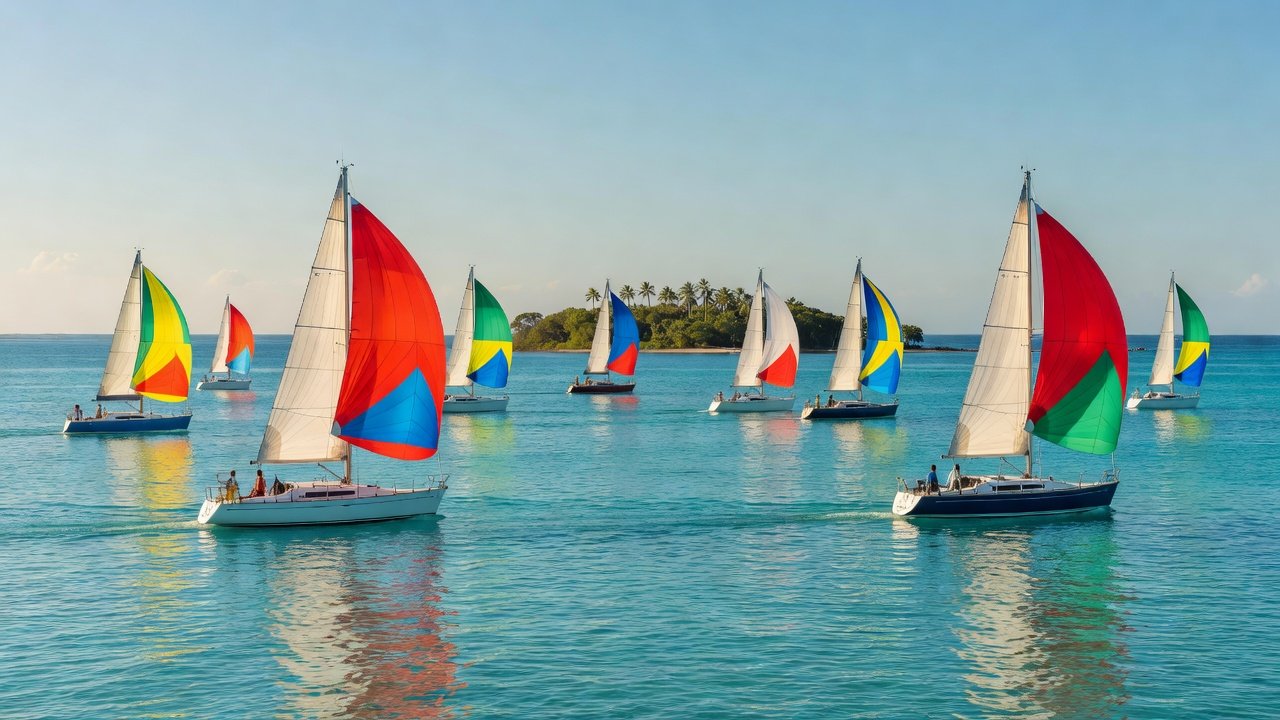
Most cruisers picture French Polynesia’s sailing calendar as bookended by two things: the Puddle Jump arrivals in June and July, and the cyclone-season scramble to haul out or head west before November 1. In between, Bora Bora and Raiatea run something quieter and easier to miss — a run of casual lagoon regattas from July through November that mix local sailors with whichever cruising boats happen to be in the anchorage that week. Unlike the more formal Tahiti Pearl Regatta, which runs a fixed multi-day course through the Society Islands each May, these are low-key, come-as-you-are events, and the season’s final ones are happening now, before the window closes.
This is a guide to what these regattas actually are, how a passing boat gets in on one, and what to expect if it does.
What a Lagoon Regatta Actually Looks Like
These aren’t races in the competitive, silverware sense. Local descriptions consistently frame them as social sailing events first and racing second — casual competition wrapped around beach gatherings, raft-ups, and the kind of scenery that makes the racing itself almost beside the point. A typical event might involve a short, informally handicapped course inside the lagoon, followed by everyone rafting up or heading ashore together afterward.
The audience is deliberately mixed: local sailing club members, charter boats out for the day, and cruising yachts that happen to be anchored nearby all sail the same course. There’s no expectation that a visiting boat has raced before, knows local rules in detail, or is even trying to win — showing up and sailing the course with everyone else is the point.
Raiatea’s Club Racing
The Raiatea Yacht Club, based at Marina Apooiti near Uturoa, is a sailing-for-all nonprofit that runs youth training programs (Optimist dinghies, Hobie Cat 16, windsurfing, and an adapted-sailing program) alongside its adult racing calendar, which includes organized “habitable” regattas — races for keelboats and liveaboard cruising boats rather than dinghies. A cruising yacht already berthed or moored near Apooiti during the July-through-November window is well placed to ask at the club about joining an upcoming race day.
Bora Bora’s Lagoon Events
Bora Bora’s version plays out inside the lagoon itself, in the same water most visiting cruisers already use for their mooring stay. With the island’s barrier reef enclosing calm, protected water and Teavanui Pass as the only way in or out, the lagoon naturally concentrates any local sailing activity into a defined, easily observed area — a boat anchored or moored in Bora Bora for more than a few days has a good chance of simply noticing a regatta forming without needing advance notice.
How a Passing Cruiser Actually Gets In
There’s no formal entry portal or advance-registration system built for visiting cruisers — these are genuinely informal events, and joining one is more about being present and asking than filling out paperwork. Practical steps that work:
- Ask at the yacht club or marina office (Bora Bora Yacht Club, Raiatea Yacht Club, or the Apooiti marina front desk) whether a regatta or informal race day is coming up during your stay. Staff at these small, cruiser-facing facilities generally know the local sailing calendar and are used to visiting boats asking.
- Listen on the cruiser-community channels — the same VHF and WhatsApp/radio networks cruisers already use for weather and logistics chatter in the anchorage are typically where an informal race day gets announced locally.
- Show up to the pre-race gathering, not just race day. Casual regattas built around beach gatherings and raft-ups often have a social start the evening or morning before, and that’s the easiest point of entry for a boat that wants to sail but doesn’t already know the local fleet.
- Don’t over-prepare the boat. These events are explicitly not about competitive trim and tactics — a cruising boat in its normal liveaboard configuration, with normal crew, fits the spirit of the event better than a boat stripped down to race weight.
Timing: Why Now Matters
The lagoon regatta season’s July-through-November run means the events remaining on the calendar right now are effectively the last ones before the cyclone-season transition — the same period covered in our haul-out and layup guide for boats deciding where to spend the coming months. A cruiser weighing whether to squeeze in one more social sail before hauling out or heading west has a narrowing but real window to do exactly that.
What Not to Expect
These are not the Tahiti Pearl Regatta, which is a scheduled, multi-day, professionally organized event each May with its own entry process, sponsor involvement, and defined course through Raiatea, Tahaa, Huahine, and Bora Bora. The lagoon regattas covered here are smaller, unscheduled in any fixed annual calendar, and dependent on local timing — which is exactly why asking locally, rather than searching for a published schedule, is the only reliable way to find one.
Frequently Asked Questions
Do we need racing experience or special safety gear to join?
No — these are explicitly casual events aimed at social sailing rather than competitive racing, and a boat’s normal cruising safety equipment is generally sufficient. Ask the organizing club directly about any specific requirements for the event in question, since local practice can vary.
Is there an entry fee?
Practices vary by event and aren’t standardized; some informal race days are free to join, while club-organized regattas may collect a nominal fee to cover organizing costs. Confirm directly with whichever club or marina is hosting.
What if our boat is a catamaran rather than a monohull?
Both boat types are commonly welcome in these mixed-fleet, informally handicapped events — ask the local organizers how multihulls are scored or grouped for that specific race day.
Is Bora Bora or Raiatea the better bet for finding one of these before November?
Both host events through the same July-November window; which one has something happening during a specific week depends on local timing rather than one location consistently outpacing the other. Asking at the marina or yacht club on arrival is more reliable than assuming either island’s calendar.